Registered nurse · Citizen of India · Living in India
Path with conditions Health and Care Worker visa · Main obstacle: Registration with the UK regulator
All 30 countries we have checked, best first. Result: 30 × path with conditions. In 30 of 30, the best route needs a job offer before you can apply.
| Country | Best route | Assessment | Main obstacle |
|---|---|---|---|
| Health and Care Worker visa | Path with conditions | Registration with the UK regulator | |
| Critical Skills Employment Permit | Path with conditions | Registration with the Irish regulator | |
| Single Permit | Path with conditions | Maltese licence for your profession | |
| Work permit (employee) | Path with conditions | Salary of at least SEK 34,470 a month | |
| EU Blue Card | Path with conditions | Recognition for your profession in Romania | |
| EU Blue Card | Path with conditions | Recognition for your profession in Hungary | |
| Work permit for expert knowledge | Path with conditions | Licence for your profession in Iceland | |
| Single residence and work permit | Path with conditions | Recognition for your profession in Bulgaria | |
| Residence permit for employment | Path with conditions | Recognition for your profession in Latvia | |
| EU Blue Card | Path with conditions | Licence to practise in Germany | |
| Highly skilled migrant | Path with conditions | Recognised sponsor and salary level | |
| Pay Limit Scheme | Path with conditions | Salary of DKK 552,000 a year | |

| Work permit for qualified workers (B or L) | Path with conditions | Employer must prove no Swiss or EU/EFTA worker was found | |
| Red-White-Red Card, shortage occupations | Path with conditions | Job offer in a shortage occupation | |
| EU Blue Card | Path with conditions | Job offer from an Italian employer | |
| EU Blue Card (talent card) | Path with conditions | Job offer paying at least €59,373 a year | |

| Highly skilled / highly qualified worker | Path with conditions | Job offer at the salary level | |
| EU Blue Card | Path with conditions | Salary must reach 150% of the Polish average | |
| EU Blue Card | Path with conditions | Salary of at least €65,652 a year | |
| Stay and work permit | Path with conditions | Employer must pass the HZZ labour market test | |
| Employee card | Path with conditions | Recognition for your profession in Czechia | |

| Residence permit for employment | Path with conditions | Recognition for your profession in Estonia | |

| Invited worker (metaklisi) | Path with conditions | Recognition for your profession in Greece | |

| Temporary residence permit for work | Path with conditions | Recognition for your profession in Lithuania | |
| Residence and work permit (employee) | Path with conditions | Recognition for your profession in Spain | |
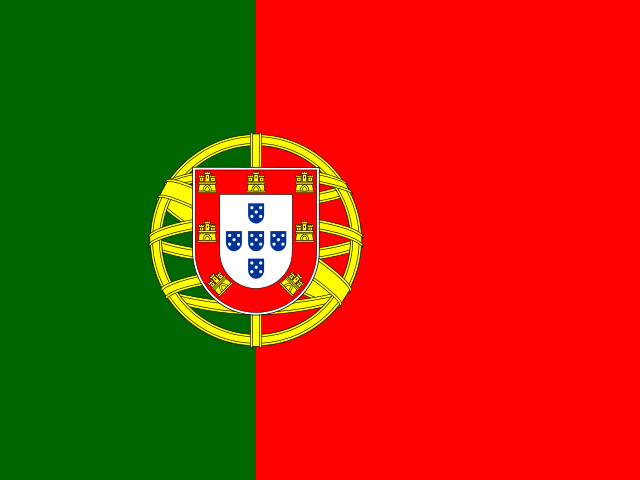
| Work visa and residence permit (employee) | Path with conditions | Recognition for your profession in Portugal | |
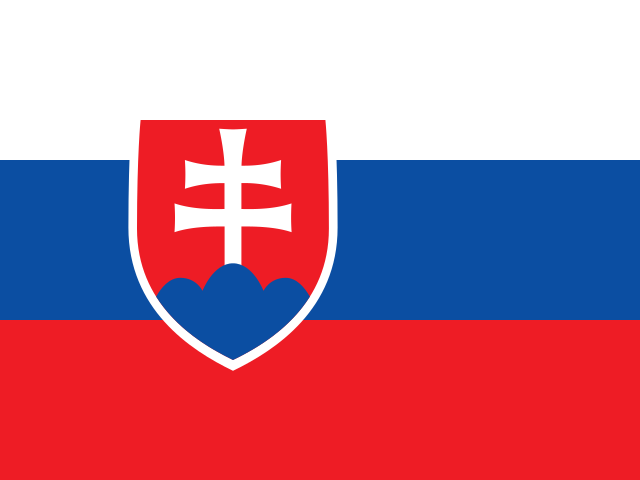
| Temporary residence for employment | Path with conditions | Recognition for your profession in Slovakia | |
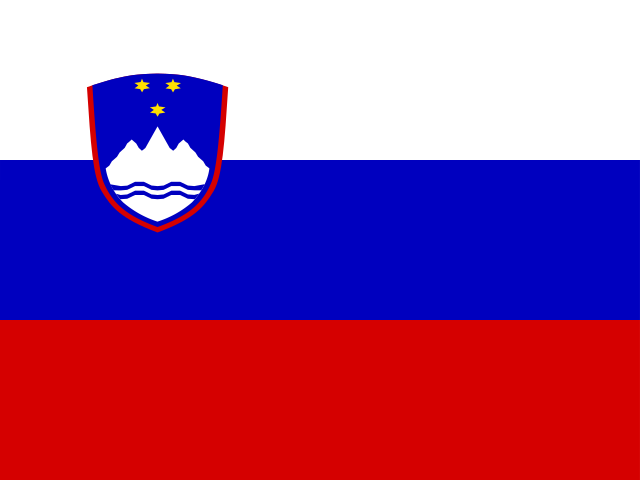
| Single permit for residence and work | Path with conditions | Recognition for your profession in Slovenia | |

| Residence permit for an employed person | Path with conditions | Recognition for your profession in Finland | |
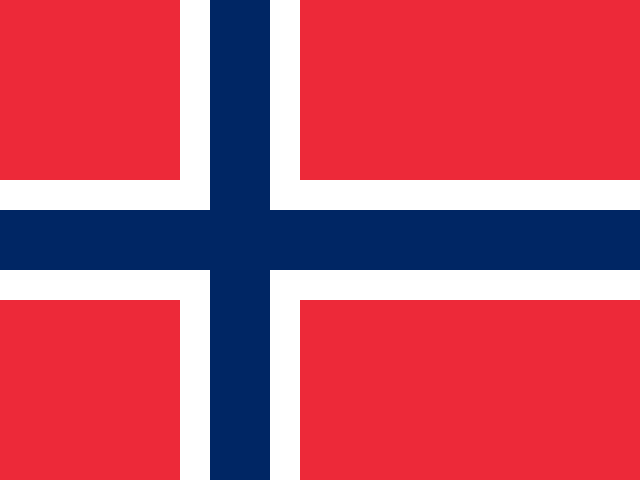
| Skilled worker | Path with conditions | Norwegian authorisation for your profession |
Judgement Countries with the same assessment are ordered by our judgement: first where you already speak a local language (regulated jobs such as nursing nearly always need it), then routes without a job offer, then fewer conditions.
All details are self-reported in the questionnaire. We have not seen original documents. How we read your answers:
| Which country is most realistic for me? | The United Kingdom, through the Health and Care Worker visa. |
|---|---|
| What is the assessment? | Path with conditions |
| What stops me today? | Registration with the UK regulator. |
| Do I need a job offer first? | Yes. This route needs a job offer before you can apply. |
| What is my second option? | Ireland, through the Critical Skills Employment Permit (path with conditions). |
The rules behind the assessment for the Health and Care Worker visa, as we read them from the official sources.
| Route | Assessment | Main obstacle |
|---|---|---|
| Skilled Worker visa | Path with conditions | Finding a licensed employer |
Countries where your languages are official languages. Speaking the local language makes it much easier to find a job, even when the permit does not require it.
| Your language | Your level | Official language in | Our result there |
|---|---|---|---|
| English | C1 | United Kingdom, Ireland, Malta | United Kingdom: Path with conditionsIreland: Path with conditionsMalta: Path with conditions |
| German | A1 | Germany, Austria, Switzerland, Luxembourg, Belgium, Liechtenstein | Germany: Path with conditionsAustria: Path with conditionsSwitzerland: Path with conditionsLuxembourg: Path with conditionsBelgium: Path with conditionsNot checked yet: Liechtenstein |
A language being official in a country does not mean a job there needs it, and not knowing it does not close a route. The assessment for each country comes from its permit rules. Your level counts when we order countries with the same assessment (see page 1).
Rules and facts that apply to you because of your passport or where you live, from our fact base. Each one has its official source and the date we checked it.
We run the same rules again with one thing changed, so each view below is backed by the rules, not by opinion. The fourth view, your languages, is section 05.
These rules apply to you because of your citizenship or the country you live in.
Routes that can work on experience alone, without a recognised qualification. Documented experience (work references, certificates) matters a lot here.
Malta · Sweden · Italy · Bulgaria · Latvia · Netherlands · Denmark · Croatia · Czechia · Estonia · Greece · Lithuania · Spain · Portugal · Slovakia · Slovenia · Finland · Poland · Luxembourg
Where your qualification gives you the best chance, whatever your nationality. Recognition of your qualification is usually the first step.
United Kingdom · Ireland · Malta · Sweden · Romania
Critical Skills Employment Permit Path with conditions
Main obstacle: Registration with the Irish regulator
For the Health and Care Worker visa. Every line comes from an official page we checked; the source and its date are given.
| Fee | Who pays |
|---|---|
| Visa fee: £324 for up to 3 years, or £628 for more than 3 years. You and your family do not pay the health surcharge. GOV.UK, Health and Care Worker visa – how much it costs, Updated 9 September 2026 | You |
Not checked yet: The going rate for each job, and the full list of occupation codes; Which jobs are on the immigration salary list and the temporary shortage list today; What you need to settle after 5 years, for example any English or other test; Whether your partner may work in the UK; UK work routes that do not need a sponsor.
Read next on studyworkeurope.org: Work in the UK · UK Health and Care Worker visa · UK visa sponsorship jobs: find and check a sponsor · UK work visa costs · UK certificate of sponsorship explained · UK red list for health and care recruitment · UK raises English to B2 · UK care workers closed from abroad
To compare with your work route: for some people, studying first is a legal way to work in Europe later. What a student permit allows in the countries where we have checked the rules. We do not check universities, tuition fees or admission.
| Country | Work while you study | After you graduate | Switching to a work permit |
|---|---|---|---|
| United Kingdom | Not checked yet | After a UK bachelor's or master's degree on a Student visa, the Graduate visa lets you stay, work in most jobs and look for work: 2 years if you apply on or before 31 December 2026, 18 months from 1 January 2027, 3 years after a PhD. Fee £937 plus healthcare surcharge. It cannot be extended. | You can switch to a Skilled Worker visa inside the UK. From a Student visa you must have finished your course, or the job must start after the course ends. |
| Sweden | If your permit was granted on or after 11 June 2026, you may work at most 15 hours per week during semesters and without limit in June, July and August. Working more can cost you your permit. | After finishing a whole programme of at least two semesters in Sweden, you can get a permit to look for work for up to one year after a bachelor's or master's degree. Apply before your student permit runs out. | From 11 June 2026, you must as a general rule have finished a programme of at least two semesters to apply for a work permit from inside Sweden. |
| Germany | As a student you may work up to 140 working days a year. Days of up to 4 hours count as half days, and student jobs at the university do not count. | After a degree from a German university you can get a residence permit of up to 18 months to look for work, if you can support yourself. | The job you find after your degree must be one that foreigners may do under the law, for example skilled work or an EU Blue Card job; you then apply for that permit. |
| Netherlands | Your employer needs a work permit (TWV) for you, and you choose either up to 16 hours a week or full-time in June, July and August. Self-employed work is allowed if you register and pay tax. | After a Dutch degree (within 3 years), the orientation year gives you 1 year to look for work and to work freely. The fee is €254 and it cannot be extended. | If you find a job, you can switch to a highly skilled migrant permit with the lower salary of €3,122 a month during or after the orientation year, or within 3 years of graduating. |
| Denmark | In a state-approved programme you may work up to 90 hours per month from September to May and full-time in June, July and August. If you applied on or after 2 May 2025 for a programme that is not state-approved, you may not work. | After a state-approved bachelor's or master's degree (student permit applied for on or after 1 October 2026) you generally get a job seeking permit of 6 months or 1 year; after a PhD, 3 years. Work rights stay the same as during studies. | If you get a job offer during the job seeking period, you can apply for a residence and work permit based on that job. |
| Switzerland | From 6 months after your course starts you may work at most 15 hours a week outside the holidays, if the canton approves, the university confirms and the employer applies. | After a degree from a Swiss university you have 6 months from the end of your studies to look for a job that matches your qualifications. | A Swiss graduate can be admitted without the rule that Swiss and EU/EFTA workers come first, but only if the work is of overriding scientific or economic interest. |
| Austria | As a student you can work up to 20 hours a week without a labour market test. The employer applies for an employment permit at the AMS. | After an Austrian degree you can renew your student permit once for 12 months to look for work or start a business, if you have enough money and health insurance. | With a job offer that matches your degree and pays what Austrian graduates normally earn, you can get a Red-White-Red Card without points and without a labour market test. |
| Italy | Not checked yet | Not checked yet | Italy's quota decree for 2026–2028 supports converting study and training permits into work permits outside the quotas. |
| Spain | Not checked yet | Not checked yet | Not checked yet |
| Norway | With a study permit you may work up to 20 hours per week, and full-time in the holidays. | After finishing your degree in Norway you can get a job seeker permit for at most one year, if you apply before your study permit runs out. You need at least NOK 28,448 per month and may work in any job while you look for a skilled job. | If you get a job offer while your job seeker application is waiting, you can change it to an application as a skilled worker. |
Sources: the official pages listed in each country guide on studyworkeurope.org, section "Studying first, then working". Never pay an agent for an admission letter.
Every report ends with answers to the questions people ask most. They are built from the report's own results, not written by hand.
There is a legal route for you, but only if 2 conditions are met. Start with the main obstacle: Registration with the UK regulator.
We only say "Open path" when the official rules show that nothing more is needed from you, and that is rare: almost every work permit depends on a job offer, a salary level, a qualification or a quota. A "Path with conditions" is a real, legal route. It is the normal result.
In the United Kingdom, check the employer here: GOV.UK register of licensed sponsors – workers. A real employer never asks you to pay for the job, the contract or the permit application. Read Never pay for a job and how to check if an employer can sponsor you.
No. We are independent: we never take money from employers or agents, and we do not apply for anyone. You apply yourself, or your employer applies, depending on the route. The official pages for the United Kingdom are listed under "Official sources" in this report. Only the authorities decide on permits.
Open your private link again. It always builds your report on the rules we have checked most recently. If we correct an error, the corrected report is there at no cost.
Your report is built from the answers you gave. If you made a mistake in the form, write to us within 30 days and we will help, or refund you under our guarantee. If your situation changes later (a new qualification, a language test, a job offer), a new report will show the difference.
Yes. If you are not satisfied, you can ask for a full refund within 30 days. Reply to the email with your report link, or write to us. See our guarantee.
No. It is independent guidance based on official rules, with the date we checked them. For a decision about your own case, the authority decides. For a legal dispute, talk to a qualified lawyer.
Another question? Write to us. A person reads every message.
| Official source | Checked | Used for |
|---|---|---|
| GOV.UK, Skilled Worker visa – your jobhttps://www.gov.uk/skilled-worker-visa/your-job | 9 November 2026 | United Kingdom |
| GOV.UK, Skilled Worker visa – knowledge of Englishhttps://www.gov.uk/skilled-worker-visa/knowledge-of-english | 9 November 2026 | United Kingdom |
| GOV.UK, Health and Care Worker visa – your jobhttps://www.gov.uk/health-care-worker-visa/your-job | 9 November 2026 | United Kingdom |
| Department of Enterprise, Tourism and Employment, Critical Skills Employment Permithttps://enterprise.gov.ie/en/what-we-do/workplace-and-skills/employment-permits/permit-types/critical-skills-employment-permit/ | 9 November 2026 | Ireland |
| Department of Enterprise, Tourism and Employment, General Employment Permithttps://enterprise.gov.ie/en/what-we-do/workplace-and-skills/employment-permits/permit-types/general-employment-permit/ | 9 November 2026 | Ireland |
| Department of Enterprise, Tourism and Employment, Critical Skills Occupations Listhttps://enterprise.gov.ie/en/publications/publication-files/critical-skills-occupations-list.docx | 9 November 2026 | Ireland |
| Department of Enterprise, Tourism and Employment, Labour Market Needs Testhttps://enterprise.gov.ie/en/what-we-do/workplace-and-skills/employment-permits/employment-permit-eligibility/labour-market-needs-test/ | 9 November 2026 | Ireland |
Sources for the rules in section 06 are listed with each rule. Rule versions: GB 2026-11-09, DE 2026-11-09, NL 2026-11-09, SE 2026-11-09, DK 2026-11-09, NO 2026-11-09, CH 2026-11-21, AT 2026-11-09, IT 2026-11-09, IE 2026-11-09, FR 2026-11-10, BE 2026-11-11, PL 2026-11-11, MT 2026-11-12, LU 2026-11-12, HR 2026-11-12, CZ 2026-11-12, EE 2026-11-13, RO 2026-11-13, GR 2026-11-13, HU 2026-11-13, LT 2026-11-13, IS 2026-11-13, ES 2026-11-17, PT 2026-11-17, SK 2026-11-17, SI 2026-11-17, BG 2026-11-17, LV 2026-11-17, FI 2026-11-17.
StudyWorkEurope, run by Gravityrock AS, org. no. 937 920 482, Norway. We do not recruit, take money from employers or share your details. This sample was produced by the same rules engine as a real report.