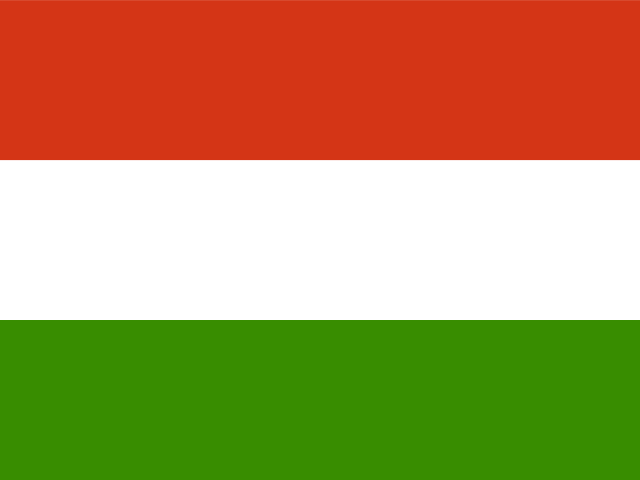

Hungary at a glance
- Population
- 9,488,428
- A medium-sized country
- Eurostat, 2026
- Size
- 93,012 km²
- Eurostat, 2026
- Average full-time salary
- €20,138 a year
- About €1,678 a month before tax
- Eurostat, 2025
- Minimum wage
- €906 a month
- Set by law, before tax
- Eurostat, 2026 (Jul–Dec)
- Cost of living
- 68.3 (EU average = 100)
- About 32% cheaper than the EU average
- Eurostat, 2024
- Unemployment
- 4.4%
- Low
- Eurostat, 2025
What these numbers mean for you
- Salaries are before tax. What you take home depends on tax and social security, which differ by country.
- Cost of living compares prices for everyday things with the EU average (100). A higher number means life is more expensive, so a higher salary does not always mean more money left over.
- Unemployment is for the whole country. It can be much lower in shortage jobs, and higher in others.
- Averages hide differences. Big cities usually pay more and cost more.
Everyday life
Checked against official sources on 9 November 2026.
Pay
Hungary has a legal minimum wage, set by the government every year. Amounts are in Hungarian forint (HUF).
| Minimum pay from 1 January 2025 (before tax) | Amount |
|---|---|
| Minimum wage, per month | HUF 296,400 |
| Minimum wage, per hour | HUF 1,704 |
| Jobs that need secondary school or a vocational qualification, per month | HUF 326,000 |
These are 2025 figures, the newest on the EURES page, so check the current amount. In 2024 the average gross monthly pay was HUF 605,800. More: Salary and cost of living in Europe.
Holidays
The basic leave is 20 working days a year. You get extra days as you get older, for example 2 extra days from age 28 and 10 extra days from age 45. Once a year you must be able to take 14 days in a row. Hungary has 11 public holidays, such as 15 March, 20 August and 23 October.
Health care
- Everyone who works is insured. Insured people can use the public health system.
- Care from providers funded by the health fund (NEAK) is generally free. You can choose your own GP.
- Your TAJ card (social security card) proves that you are insured.
- Doctors with a NEAK contract write prescriptions free of charge.
Sick pay and parental leave
- Sick leave: up to 15 days a year, paid at 70% of your normal pay. After that, sick pay can come from health insurance, depending on how long you have been insured.
- Maternity leave: 24 weeks in a row.
- Fathers get 5 extra days of leave when a child is born.
Housing
- In central Budapest, a well-kept flat of over 100 m² often costs more than HUF 370,000 to 400,000 a month, not counting utilities.
- For people who rent, housing costs can take 50–60% of their spending (2024 data).
- A written rental contract is recommended.
- Before you rent, you can check who owns the property (the property title) online on the government portal.
Childcare
- Crèches look after children up to age 3, all day or half day.
- Kindergarten is compulsory from age 3 until school starts.
- Public education is generally free. Kindergartens and primary schools usually do not have entrance exams.
Still being checked: Until then, the EU's Your Europe portal explains your rights as a worker in Europe.
Climate
Summers, winters and daylight, so you know what to expect.
Being checkedSources
- EURES (European Commission), Living and working conditions – HungaryPage dated 3 July 2026, last modified 20 October 2026. Checked 9 November 2026
- Eurostat: Population on 1 January (tps00001)Updated 27 October 2026
- Eurostat: Monthly minimum wages - bi-annual data (earn_mw_cur)Updated 31 July 2026
- Eurostat: Purchasing power parities, price level indices, nominal and real expenditures by analytical categories - based on COICOP 1999 (prc_ppp_ind)Updated 10 July 2025
- Eurostat: Unemployment by sex and age - annual data (une_rt_a)Updated 6 November 2026
- Eurostat: Average full time adjusted salary per employee (nama_10_fte)Updated 6 November 2026
- Eurostat: Area by NUTS 3 region (reg_area3)Updated 22 January 2026
Eurostat figures fetched 9 November 2026. Each figure shows the period it covers.