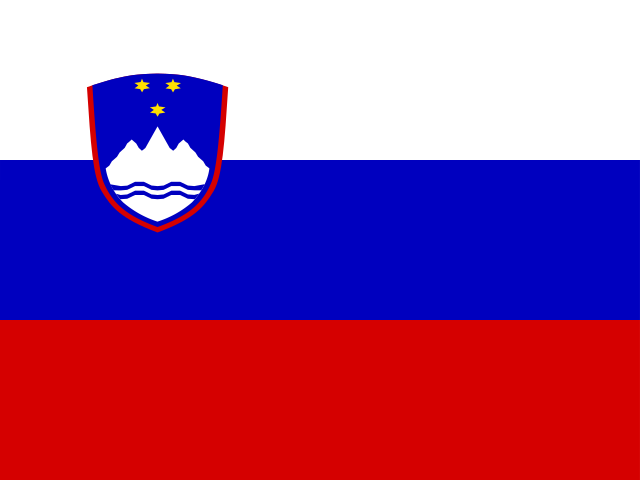

Slovenia at a glance
- Population
- 2,135,107
- A small country
- Eurostat, 2026
- Size
- 20,273 km²
- Eurostat, 2026
- Average full-time salary
- €37,586 a year
- About €3,132 a month before tax
- Eurostat, 2025
- Minimum wage
- €1,482 a month
- Set by law, before tax
- Eurostat, 2026 (Jul–Dec)
- Cost of living
- 91.0 (EU average = 100)
- About 9% cheaper than the EU average
- Eurostat, 2024
- Unemployment
- 3.9%
- Low
- Eurostat, 2025
What these numbers mean for you
- Salaries are before tax. What you take home depends on tax and social security, which differ by country.
- Cost of living compares prices for everyday things with the EU average (100). A higher number means life is more expensive, so a higher salary does not always mean more money left over.
- Unemployment is for the whole country. It can be much lower in shortage jobs, and higher in others.
- Averages hide differences. Big cities usually pay more and cost more.
Everyday life
Checked against official sources on 9 November 2026.
Pay
The lowest pay allowed by law is the minimum gross wage. “Gross” means before tax and social insurance are taken off.
| Item | Amount |
|---|---|
| Minimum gross wage, full-time | €1,481.88 a month |
| Average gross salary (2025) | €2,536.03 a month |
- You are paid at least once a month, and you get a written payslip each time.
- If you get annual leave, you also get holiday pay of at least the minimum wage, and a Christmas bonus of half the minimum wage.
See also Salary and cost of living in Europe.
Holidays
You get at least 4 weeks of paid annual leave every year, also if you work part-time. You must take at least 2 weeks in one block during the year. You can get extra days, for example because of your age or children.
Slovenia also has 14 national holidays and non-working days in 2026.
Health care
After you sign your work contract, your employer must register you for compulsory social insurance, including health insurance.
- You get a health insurance card. You can choose your own family doctor (GP), dentist and gynaecologist.
- There is also a compulsory health contribution of €39.36 a month (March 2026 to February 2027). It is taken from your pay.
- Emergency number: 112.
Sick pay and parental leave
- Sick leave: you have the right to stay away from work when you are ill or injured. EURES does not give the sick pay amounts.
- Maternity leave: 105 days, paid at 100% of your pay base. It starts 28 days before the due date.
- Paternity leave: 15 days for fathers, paid at 100% (with an upper limit).
- Parental leave: 160 days for each parent, paid at 100% (with an upper limit).
To get these benefits you must have parental protection insurance. This is part of the social insurance your employer registers you for.
Housing
Most homes are privately owned. You find them through agencies, newspapers and websites.
| Rent in Ljubljana (indicative) | Per month |
|---|---|
| Studio apartment | around €600 |
| Two-room apartment | around €1,000 |
Rents in most other regions are about 20% lower. The rental agreement should be certified by a notary. As a tenant you must give 60 days’ notice to leave.
Childcare
Nursery school (pre-school) is for children from 11 months until they start primary school at age 6. It is not compulsory. There are public and private nursery schools. EURES does not give the fees.
Still being checked: Until then, the EU's Your Europe portal explains your rights as a worker in Europe.
Climate
Summers, winters and daylight, so you know what to expect.
Being checkedSources
- EURES, Living and working conditions: SloveniaPage dated 3 July 2026
- Eurostat: Population on 1 January (tps00001)Updated 27 October 2026
- Eurostat: Monthly minimum wages - bi-annual data (earn_mw_cur)Updated 31 July 2026
- Eurostat: Purchasing power parities, price level indices, nominal and real expenditures by analytical categories - based on COICOP 1999 (prc_ppp_ind)Updated 10 July 2025
- Eurostat: Unemployment by sex and age - annual data (une_rt_a)Updated 6 November 2026
- Eurostat: Average full time adjusted salary per employee (nama_10_fte)Updated 6 November 2026
- Eurostat: Area by NUTS 3 region (reg_area3)Updated 22 January 2026
Eurostat figures fetched 9 November 2026. Each figure shows the period it covers.